Category: therapists

  • October’ing: Autumn’s Season

    October’ing: Autumn’s Season

    Navigating with Love

    The Becoming: Generational Mid-Life and the Emotional Intelligence of Self-Discovery

    It’s in the quiet, candlelit hours of GenX-ing—when menopause-induced insomnia gently disrupts the night—that the deepest soul work begins. This is the new terrain of life: navigating the Empty Nest, the clinical realities of Diabetes and Menopause, and the relentless work of Single Parenting. But more than a list of challenges, this is an invitation to lean into the continuous, lifelong process of becoming—the act of learning and aligning with the truest self.


    The Stirring: Reconciling Capacity and Calling

    Last Sunday, the Pastor’s abrupt, almost vernacular question—”You just showing up… and not using your gifts. Not nan gift, not one?!”—acts as a spiritual provocation. It’s the divine equivalent of a coach calling a time-out: not an accusation, but a forceful invitation to acknowledge the potential you hold. This moment is the essence of true spiritual accountability, my own.

    This spiritual accountability, though met with an internal response “Sis tired” chuckle, remains the essence of emotional self-awareness. It tugged at my heart —to reconcile our current capacity with our inherent calling.

    My history with faith is one of reverence, where teaching Sunday School once felt like a natural flow of my spiritual gift. That gift, when a church home shifted, didn’t vanish—it simply transferred its medium. It became the ministry of therapy.

    This transference illustrates a powerful clinical principle of emotional intelligence: Adaptability and the re-channeling of purpose. My “can-do” spirit, once dedicated to religious education, now finds its highest expression in professional ethics—the oath to do no harm, to embody empathy, and to remain faithful to my clients’ healing. This is the integration of self—a conscious choice where the spiritual commitment (“I’ll show up faithfully”) merges with professional standards. That growing, healing confidence—the emergence of the affirmed “I”—is the sound of self-mastery in action.

    Podcast: https://renovare.org/podcasts/lifewithgod/reward-sibanda-how-to-fast


    Clinical Wisdom: Navigating the Body as a Sacred Text

    Our mid-life landscape forces us to confront the undeniable link between the physical and the emotional. As a therapist, I’m immersed in evidence-based science, theory, and methodology. Yet, the wisdom gained from navigating my own chronic illness (Diabetes) and hormonal shifts (Menopause) is a science of the self.

    The intricate dance of managing blood sugars, bone density, and muscle mass while wrestling with sweat soaked sheets is a poignant metaphor for my current developmental stage. It teaches an advanced form of self-regulation. The detailed, excruciating observation—that medication absorption differs between the thigh and the stomach—is a stark reminder of the precision required for body-mind integration. It hurt.

    We recognize that even when we felt we were “doing all the good things” —-in our 50s, the body’s internal clock and genetic blueprint have the final word. This necessity for structured, consistent care isn’t a limitation; it’s an essential, deep spiritual discipline. It’s the intentional practice of fasting to not neglect, ensuring our physical temple remains whole, just in a beautifully new way. This is not a space of fear, but of heightened mindfulness and self-compassion.


    The Anatomy of a Soul-Stretch: Identity and Healing

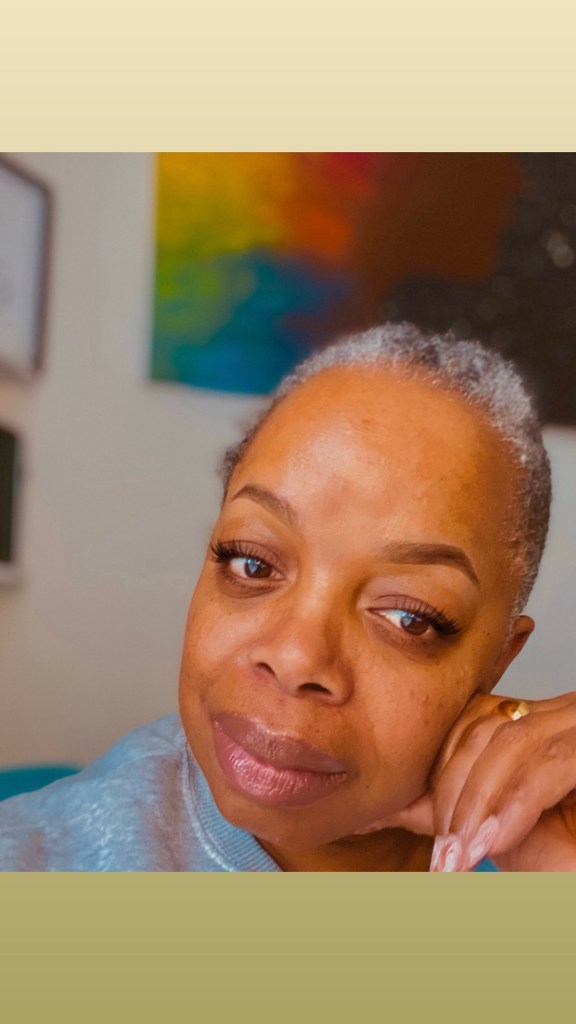
    Identity in mid-life is not a fixed point, but a perpetual soul-stretch. The silvering of hair is less about acquired wisdom and more about the simple, undeniable marker of experience. The heart will continue its rhythm of love, pain, breakage, and repair. What we learn is the heart’s untiring capacity for healing. The journey of emotional intelligence hinges on this realization: that healing is not an end state, but a regenerative process.

    For those of us cultivating solitude, the fleeting frustration of “being single still” gives way to a miraculous enhancement of self-sufficiency and internal coherence. We are not lost in the struggle, nor are we frantically searching for answers to the Unknowns of the future. The “monsters” of our past—the unresolved traumas and anxieties—are diminished because we have chosen to lean not into our own limited understanding, but into a trust that is larger than what we can currently see.

    This is the ultimate clinical insight and spiritual offering: giving up and giving in are rarely the only choices.

    Choose bigger. Choose the self you are #becoming. Faith your journey with love, practice being loving, and trust that the love you put forth will organically find its way back to you. The promise of the rainbow—the assurance of soul-level connection—is for those who faithfully show up, gifts in hand, for the ongoing, beautiful work of their own becoming.

    Intimately Worded.

    Michelle 🌿💕

  • Blocking vs. Boundary Setting in Intimate Relationships: Choosing What Protects Your Peace

    Blocking vs. Boundary Setting in Intimate Relationships: Choosing What Protects Your Peace

    Intuition and Self Love

    In the landscape of intimate relationships—especially ones that have ended or grown complicated—the question often arises: Do I block them, or do I set a boundary and keep the line open? Both choices carry meaning, weight, and consequences. The decision is deeply personal, but understanding the difference can help you move toward clarity and healing.


    What Is Blocking?

    Blocking is a hard boundary. It’s a clear, uncompromising decision: “You no longer have access to me in this space.”When you block someone, you remove their ability to call, text, or interact with you on social platforms. This is often used when continued access feels harmful, triggering, or disrespectful to your healing process.

    ✨ For example, one client described how every morning text from her ex felt like reopening a wound. When she finally blocked him, she said she could breathe deeper—the silence felt like freedom, not loss. She likened it to closing a door so her spirit could finally rest.

    • Impact of Blocking:
      • Immediate relief from unwanted contact.
      • Reduces temptation to re-engage in unhealthy dynamics.
      • Signals to yourself that your peace matters more than their access.
      • Can, however, stir feelings of finality or grief—sometimes blocking means truly accepting closure. The “what-if” ping pong game.

    What Is Boundary Setting?

    Boundary setting is a soft or flexible limit. It might look like muting notifications, telling the person when and how you are willing to communicate, or choosing to disengage without fully cutting off access. Boundaries require ongoing communication and reinforcement, and they often shift depending on your healing and growth.

    ✨ Another client chose boundaries over blocking with a co-parent. She muted notifications outside of agreed parenting hours, so she wasn’t startled by messages at night. This gave her control and calm, without shutting the door on necessary communication. She said it felt like drawing a gentle circle of protection around herself and her child.

    • Impact of Boundary Setting:
      • Preserves a sense of control without complete severance.
      • Allows room for civility, co-parenting, or shared responsibilities.
      • Requires emotional strength to hold the line when boundaries are tested.
      • Can prolong attachment if the other person continues to cross boundaries or send mixed messages.

    Which Is Right for You?

    The choice between blocking and boundary setting comes down to one central question: Does their access to me nurture my healing, or does it harm it?

    • If their presence disrupts your peace, drains your energy, or constantly reopens wounds—blocking may be the healthiest option.
    • If there is space for respect, distance, and maturity in ongoing contact—boundary setting may work.

    Neither choice is about punishment; both are about protecting your well-being.


    The Deeper Impact

    • Blocking often brings a sharper sense of relief and clarity, but also demands acceptance of closure.
    • Boundaries offer flexibility, but can leave cracks where old dynamics slip back in.

    Both paths teach you something powerful: your care, energy, and attention are sacred resources. Choosing how to guard them is an act of self-respect.


    A Gentle Spiritual Reminder

    When facing the choice to block or set boundaries, it can help to soften the moment with spiritual grounding. Offer yourself a simple prayer or affirmation:

    “I release what disturbs my peace. I trust that God, Spirit, and Love guide me into relationships that honor my soul. My heart is safe, my life is unfolding, and I am whole.”

    Remember: healing isn’t just about saying no to someone else—it’s about saying yes to yourself, your faith, and your future.


    Call to Action

    If you find yourself wrestling with this decision, take time to journal, pray, or meditate on these questions:

    • When I allow access, do I feel peace or pain?
    • When I remove access, do I feel loss or freedom?
    • What does my spirit long for in this season of my life?

    If the answers feel heavy, consider reaching out to a trusted therapist, faith leader, or supportive community. Sometimes the most spiritual act of love is to protect the vessel that is you.

    Intimately Worded,

    Michelle

    @TransitionalPathwaysPLLC

    Where healing is sacred and intimacy begins with you.

  • The Eighth Month: A Season of Shifts, Soul Work, and Soft Becoming

    The Eighth Month: A Season of Shifts, Soul Work, and Soft Becoming

    By Michelle Tillman, PsychoTherapist/Founder of Transitional Pathways, PLLC

    Graced for more💕

    August has always felt like a threshold month. The eighth out of twelve, it marks a quiet turning point—a slow descent from summer’s height into something more inward, reflective. The number eight, symbolizing new beginnings and infinite cycles, reminds me that change isn’t always loud. Sometimes it’s a whisper, a knowing, a sacred nudge inward.

    This August, I’m paying closer attention.

    I’m noticing how much I’ve grown through the stillness and the storms. Life, love, and relationships—each carry layers of complexity I continue to unpeel, not just as a therapist, but as a Black woman who holds space for others while learning to hold space for myself. Each interaction becomes an opportunity for reflection and growth, revealing deeper truths about my journey and the interconnectedness of our experiences.

    Parenting Through Transitions

    Parenting adult children is its own sacred terrain. There’s a constant balancing act between support and surrender, concern and trust. The role shifts from being a protector to a mirror—from telling them what to do, to showing them who I am becoming. And in that, I’m relearning who I am, too. It’s an intricate dance that requires both courage and vulnerability. As I navigate this evolving relationship, I find myself reflecting on the lessons of patience and grace that I wish to impart. There are days I want to gather them like I used to when they were small, encasing them in the warmth of my love and protection. And there are days when I sit quietly, choosing not to fill the silence, letting them figure it out—letting me figure it out. It’s hard. It’s holy. It’s human, a reminder that growth often comes in layers, revealing more of us in the process.

    The Inner Work of Love

    In love—romantic or otherwise—I’ve stopped striving for clarity at the expense of peace. I’ve learned that deeper connection doesn’t come from figuring someone out but from allowing myself to be fully known, even in uncertainty. Intimacy, for me now, feels less like pursuit and more like permission. The permission to be present, to not shrink, to not pretend I don’t need gentleness. Embracing this vulnerability has deepened my relationships in unexpected ways, fostering a sense of safety and trust that allows us to explore the beautiful complexity of our connections.

    I no longer equate urgency with care. Instead, I ask, Can this connection honor my healing pace? That question alone has brought more clarity than some relationships ever could. It’s taught me the power of setting boundaries and recognizing when a relationship fuels my spirit versus when it drains my energy.

    Spirit-Led Slow Living

    This season, I’ve been deepening my relationship with prayer, meditation, and the quiet art of slowing down. I used to think rest was the reward. Now I know it’s the way. Meditation isn’t always serene. Sometimes it’s tears. Sometimes it’s silence that says, “you’re safe now.” I’ve learned that God often speaks in the pauses between breaths, not just in the outcomes I used to chase. There is a different kind of wisdom that rises when you stop rushing. It invites you to savor life’s moments, to appreciate the beauty in the mundane, and to embrace stillness as a teacher.

    In this letting go of haste, I’ve begun to uncover the richness of my inner landscape—thoughts, feelings, dreams—and allowed them to unfold naturally.

    Holding Space for Myself

    As a therapist, I’ve witnessed transformation in others. But this year, I’ve been asked to be the witness for myself. To name my desires. To grieve what never happened. To celebrate how far I’ve come—even if no one else sees the full stretch. Healing is a personal journey, and each step brings me closer to my authentic self, reminding me that I am not defined by my past, but rather by my resilience.

    August reminds me that healing doesn’t have to be complete to be worthy. I can be tender and powerful. Grieving and grateful. Longing and whole. This dance of contradictions is where I find my strength, my joy, and my truth.

    To You, Reader:

    If you are navigating change—be it in your body, your boundaries, your beliefs—I hope you honor the pauses. I hope you let softness find you. I hope you remember that your pace is not a problem. It’s part of your becoming. Each step along this path is significant, and each moment of reflection is a gift to be cherished.

    Let August be an altar. Not to who you used to be, but to the soul you’re still discovering. Embrace this time of introspection, allowing it to guide you into deeper understanding and appreciation of both yourself and the intricate tapestry of life that connects us all.

    Always, with grace and truth.

    Intimately Worded,

    Michelle

    @TransitionalPathwaysPLLC

    Where healing is sacred and intimacy begins with you.

  • After the Session

    After the Session

    Written by: Michelle Tillman, LCMHC

    May is Mental Health Awareness Month

    #HealthyLove

    Working as a therapist, we are privy to hearing life stories, an individual’s experiences. We listen to their pain and their victories, the simple, small, and big things. Self-love, self-care, and wellness are synonymous with great health, mentally, spiritually, and physically. Lately, I am noticing a trend: we no longer know how to be in a healthy relationship nor do we know what one looks like. Across all societal norms and other corporate platforms, we are demanded to forgive (without processing) and negatively “coached”, argued with, and hurtfully told we are wrong for wanting more. Social media, reality shows, and life challenges normalize dysfunction; we learn to accept pain as a reward, we measure love by difficulty and hardship.

    We tend to move into relationships out of loss and/or a specific want, losing sight of what we need. A client once shared with me: “I do not want to date out of circumstance. Does that make me selfish?” I responded that it was one of the most powerful statements I have heard in a while: “I do not want to date out of circumstance.” What a refreshing thought process, one that requires strength, recovery, self-discipline, and confidence.

    Relationships have become unhinged at the cost of “influence” and social popularity. Toxicity and narcissism have become synonymous with band-aid quotes and placating sentiments: “Go to therapy.” Yet, there is not any evidence of real change. We recycle patterns and repeat our past with someone new. Rarely does anyone commit to the hard work. We unknowingly agree to be in relationships without ever understanding the difficulty in creating new patterns and different thought processes nor the impact of trauma.

    I encourage you to recognize and learn red flags. Understand that red flags signify that this does not feel good, that this person is not for you and that “fixing” others is never a winning concept. We cannot “fix” people. Below are a few tips when seeking healthy relationships:

    1. Stay present and connected to your personal values.
    2. Do not date out of circumstance. Self-validation and self-prioritization are key.
    3. Know that any relationship is destructive when it decreases your quality of life. 
    4. When a partner disrupts relationship with your immediate family life, demanding you cut off direct communication: RED FLAG!
    5. There are several Thinking Traps that can get in the way of creating a healthy relationship: concealing, impediments, emotional responsibility, mind-reading trap, the truth trap and the victim trap.

    Remember you are wanting a healthy relationship that is good for you, that nurtures you, your growth, your life. Truly, settling for a “trending” companionship should never be an optimal option. I believe there are so many other consequences when we settle. I encourage you to trust your journey, honor your pathway and love with purposeful intention for every aspect of your life.

    Intimately, my prayer for you is to be healthy, loving and free—your way without harm and without selfishness. Continue to do your work, your soul work.

    Intimately Worded,

    Michelle

    Disclaimer: The post provides valuable insights on healthy relationships and the impact of societal influences. The language and tone are engaging, making the content relatable. It effectively encourages self-reflection and awareness, offering practical tips for fostering healthy relationships. Overall, the post offers meaningful advice for maintaining healthy relationships amidst societal pressures.

    2–4 minutes